If you are deciding between Kāhala and Diamond Head, you are not choosing between two versions of the same luxury neighborhood. You are choosing between two distinct lifestyles that happen to sit side by side in East Honolulu. One tends to feel quieter and more uniformly residential, while the other offers more architectural variety and more pockets near parks, trails, and daily amenities. This guide will help you compare lot patterns, walkability, ocean access, and pricing so you can narrow in on the Honolulu luxury address that fits you best. Let’s dive in.
Why Kāhala and Diamond Head Feel Different
Kāhala and Diamond Head are neighboring luxury markets, but they are defined differently at the city level and feel different on the ground. Waialae-Kahala is its own neighborhood board area, while Diamond Head sits within the broader Diamond Head/Kapahulu/St. Louis Heights board area that stretches closer toward Waikīkī.
City neighborhood data also shows Waialae-Kahala is smaller and less populated than Diamond Head-Kapahulu. That helps explain why Kāhala often feels quieter and more purely residential. Diamond Head, by contrast, has a broader mix of residential streets and visitor-adjacent areas.
A big reason is Diamond Head State Monument. The monument spans more than 475 acres on the eastern edge of Waikīkī’s coastline and receives more than 3,000 visitors per day. If you are looking near the crater, Monsarrat Avenue, or Kapiolani Park, that public-amenity energy becomes part of the lifestyle.
Kāhala Housing Character
Kāhala’s residential identity took shape later than Diamond Head’s. Much of the neighborhood developed in the 1950s and 1960s, with planning patterns that included single-story provisions and setbacks.
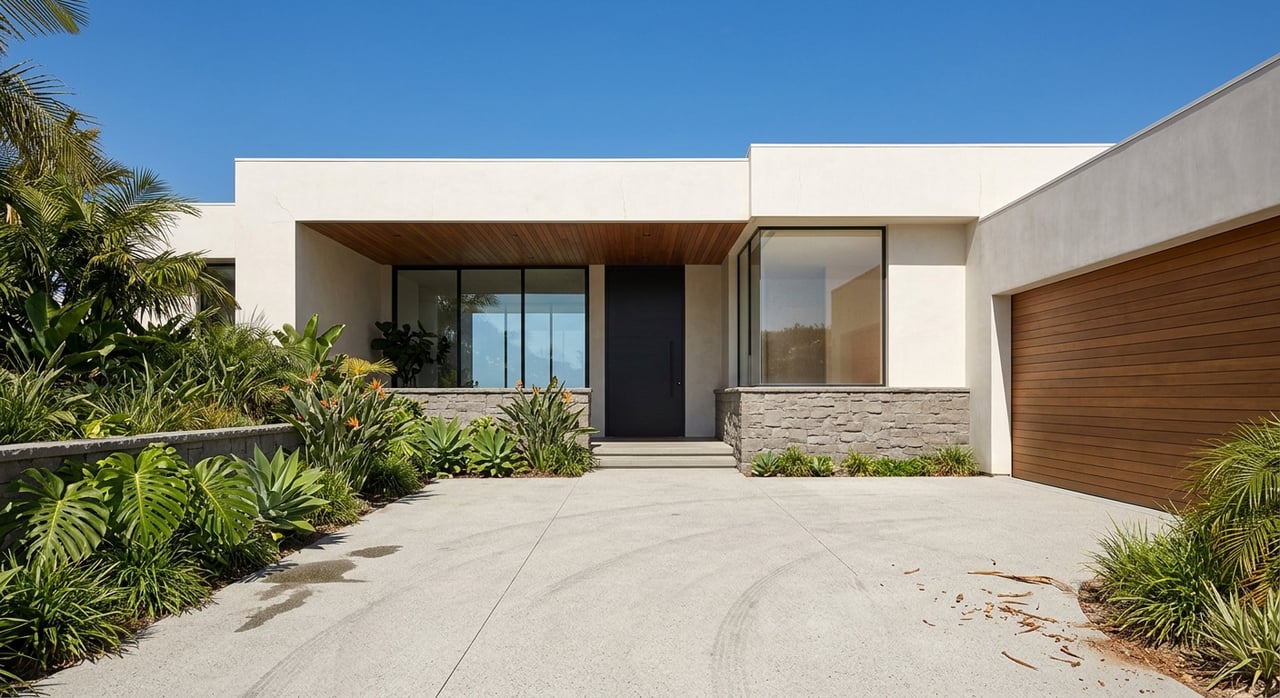
Today, that history still shows up in the streetscape. Many parts of Kāhala feel more uniform, with broader estate parcels, a calmer street rhythm, and a more suburban luxury character. You will still find architectural variety, including Hawaiian-style, mid-century modern, and ranch-era homes, but the overall impression is usually more consistent from block to block.
Recent listing examples also support Kāhala’s estate reputation. Parcels in the area have included lots around 6,560, 8,775, 11,193, 13,500, 14,743, and 20,021 square feet. That does not mean every Kāhala property is oversized, but it does suggest a more consistently large-lot pattern.
Diamond Head Housing Character
Diamond Head tells a different story. Its housing stock is older overall and more stylistically mixed, with notable homes and subdivisions dating back to the 1920s through the 1940s.
That earlier development period gives parts of Diamond Head a stronger sense of architectural history. Examples in the area include Spanish Mission Revival, bungalow, streamline moderne, Italian Villa revival, and Hawaiian-style homes. If you care about provenance, older design details, and a more layered neighborhood feel, Diamond Head may stand out to you.
Lot sizes in Diamond Head can still be substantial, but they vary more by street and micro-location. Recent examples in comparable price tiers have ranged from about 4,675 and 4,862 square feet to 7,286 and 12,066 square feet, plus an exceptional 89,125-square-foot oceanfront estate. The key point is variety. Diamond Head can shift quickly from modest lots to trophy properties.
Lot Size and Street Feel
If your top priority is a more estate-like environment, Kāhala usually has the edge. Its lot patterns tend to be more consistent, and that consistency often shapes the overall feel of the neighborhood.
If you enjoy contrast and discovery, Diamond Head may be more appealing. One street may feel tucked away and historic, while another may be closer to park activity, visitor traffic, or a walkable dining pocket. That variety can be exciting, but it also means you need to evaluate each block more carefully.
For many luxury buyers, this is where the decision starts to become clear. Kāhala often delivers a more predictable residential experience, while Diamond Head offers more variation in character, architecture, and daily rhythm.
Ocean Access and Outdoor Lifestyle
Both neighborhoods offer excellent coastal appeal, but they present it in different ways. Kāhala’s shoreline experience tends to feel quieter and more residential.
Kahala Beach is a public-access beach near Waialae Beach Lots, and Waialae Beach Park is listed by the City at 4.38 acres. For buyers who want a calm coastal setting with a more private feel in the surrounding streets, this part of the market often checks that box.
Diamond Head offers a different kind of outdoor lifestyle. Depending on where you buy, you may be closer to Kapiolani Park, Diamond Head State Monument, and the broader beach and park network near the crater side of the neighborhood.
That can create a more active day-to-day experience. If you like quick access to trails, open green space, and a stronger connection to surrounding public amenities, Diamond Head may feel more dynamic.
Walkability in Each Neighborhood
Walkability is one of the clearest differences between these two areas. In Kāhala, Walk Score examples on Kahala Avenue show scores of 10 and 25, which points to a strongly car-dependent lifestyle.
For many luxury buyers, that is not a drawback. It often supports the quieter, lower-traffic routine that makes Kāhala attractive in the first place. If you prefer privacy and do not mind driving for most errands or dining outings, Kāhala aligns well with that pattern.
Diamond Head is more mixed. Walk Score examples around Monsarrat Avenue and Kanaina Avenue show scores of 83 and 76, while some Diamond Head Road addresses farther east score between 27 and 34.
That means Diamond Head is best understood as a patchwork. Some pockets are much more walkable, especially near Monsarrat, Kapiolani Park, and the crater-side amenities. Other areas still function more like classic residential enclaves where a car remains essential.
Market Pricing and Supply
Kāhala generally sits at a higher overall price point than the broader Diamond Head groupings. In April 2026 neighborhood data, Waialae-Kahala showed a median listing price of $3.59 million with 54 homes for sale.
In the broader Diamond Head-Kapahulu-St. Louis Heights grouping, the median listing price was $1.15 million with 113 homes for sale. Honolulu Board of REALTORS® data from December 2025 showed a similar pattern in single-family sales, with Waialae-Kahala at $3.22 million versus $1.29 million for Kapahulu-Diamond Head.
Year-to-date medians also reflected the gap, with Waialae-Kahala at $2.70 million versus $1.58 million for the broader Diamond Head region. These are broad MLS groupings, not street-specific luxury comps, but they still show an important market truth. Kāhala is typically the tighter-supply, higher-priced market.
That said, Diamond Head’s top end is still very significant. Diamond Head Terrace, for example, has been listed with a median listing price of $2.50 million, and the neighborhood includes some of Honolulu’s most historically notable luxury homes.
Which Neighborhood Fits You Best
Choose Kāhala for privacy and consistency
Kāhala may be the better fit if you want:
- Larger and more consistently estate-like parcels
- A quieter residential setting
- A more uniform luxury feel from block to block
- A car-first lifestyle with less emphasis on walkability
- A neighborhood that feels more insulated from visitor activity
Choose Diamond Head for character and access
Diamond Head may be the better fit if you want:
- Older homes with stronger architectural history
- More variety in street character and home style
- Better odds of being in a walkable pocket
- Easier access to parks, trails, and nearby dining areas
- A location that feels more connected to public amenities
Why Micro-Location Matters Most
In both Kāhala and Diamond Head, the exact block matters more than the neighborhood label alone. A home’s frontage, setback, view corridor, and distance to nearby amenities can shape your experience just as much as the address itself.
That is especially true in Diamond Head, where walkability and activity levels can change quickly from one street to the next. It also matters in Kāhala, where some homes lean more beach-oriented and others feel more tucked away within the residential grid.
If you are buying at this price point, broad neighborhood impressions are only the starting point. The best decision comes from comparing the exact streets and properties that match your goals.
Whether you are looking for a quieter estate setting in Kāhala or a more historic, walkable pocket in Diamond Head, working with a brokerage that understands Honolulu’s luxury micro-markets can make the search more efficient and more strategic. If you want personalized guidance on select single-family opportunities in these neighborhoods, connect with Fortune Hawaii Realty.
FAQs
What is the main lifestyle difference between Kāhala and Diamond Head?
- Kāhala generally feels quieter, more residential, and more car-dependent, while Diamond Head tends to offer more architectural variety and more pockets near parks, trails, and neighborhood amenities.
Are Kāhala homes usually larger than Diamond Head homes?
- Kāhala usually shows more consistently estate-like lot sizes, while Diamond Head has a wider range of parcel sizes depending on the street and micro-location.
Is Diamond Head more walkable than Kāhala?
- In many pockets, yes. Areas near Monsarrat Avenue and Kanaina Avenue show much higher walkability than typical Kāhala addresses, although some Diamond Head streets are still car-dependent.
Is Kāhala more expensive than Diamond Head?
- Broad market data shows Waialae-Kahala at a higher median listing price and tighter supply than the broader Diamond Head groupings, though Diamond Head still includes very high-end luxury properties.
Should you choose by neighborhood name or exact street?
- Exact street matters more. In both neighborhoods, frontage, setbacks, views, and proximity to parks or activity can significantly change the day-to-day experience.