"Single-family buyers are largely weighing the purchase price, while condo buyers are also looking at maintenance fees, insurance and reserve funding as part of the monthly cost of ownership." Aaron Tangonan, president of the Honolulu Board of REALTORS®, said that in the board's August 2026 market release. He added that sellers who are upfront about their building's financial position have generally seen better results.
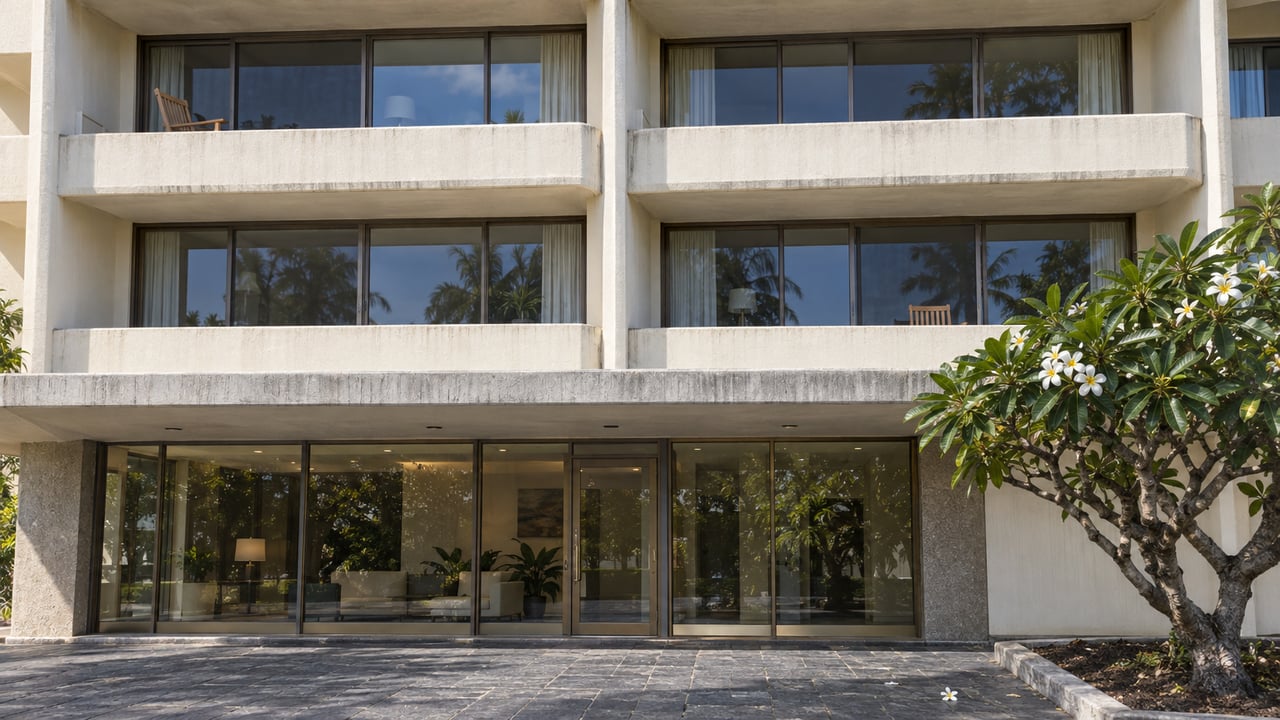
In an older Waikīkī high-rise, the biggest item in that financial position is often the building's answer to Honolulu's fire-safety retrofit law. Under Ordinance 25-4, the deadline everyone quotes, May 3, 2038, is more than eleven and a half years away. The costs connected to it show up much sooner, in insurance premiums, special assessments, and a May 2030 deadline by which a board has to talk through financing with owners and file a written design plan and timeline.
The Paperwork That Already Exists
Start with the documents, because the law produces several of them, and a buyer can ask to see them.
Under the current fire code, which Ordinance 25-4 amended and the mayor approved on January 3, 2025, an existing high-rise residential building without full sprinkler coverage has two ways to comply. It can install sprinklers throughout, or it can earn an acceptable score on a building fire and life safety evaluation. The evaluation is prepared by a licensed design professional, or by the building's authorized representative under that professional's supervision, and it must carry the professional's stamp. The licensed professional must give the association its scores by each category.
The category scores matter more than any other single document. They show where a building falls short and how much ground it has to make up.
The second document is the opt-out disclosure. An association in a building of 10 or more floors that opts out of sprinklers and relies on the evaluation path must give verifiable disclosure to current and future owners and residents. The code says that includes real estate sales disclosures as Hawaiʻi industry practice requires. If a building has chosen that path, the record of that choice should be in the disclosure package.
Roughly Ninety Entries in One ZIP Code
The Honolulu Fire Department publishes a roster of existing high-rise residential buildings, last updated April 24, 2026. About 90 entries carry Waikīkī's 96815 ZIP code. Here is a sample of the names, with the details the roster lists for each:
| Building | Floors | Units | Interior corridor | Year built |
|---|---|---|---|---|
| Colony Surf | 20 | 172 | Yes | 1959 |
| Foster Towers, Residential Tower | 26 | 127 | Yes | 1961 |
| 250 Ohua | 15 | 93 | Yes | 1970 |
| Four Paddle Condominium | 25 | 250 | Yes | 1973 |
| Canal House | 24 | 144 | No | 1974 |
| Aloha Lani | 35 | 359 | No | 1975 |
| Chateau Waikiki | 39 | 459 | Yes | 1975 |
| Discovery Bay | 42 | 666 | Yes | 1977 |
There are two reasons to look at the interior corridor column. The code exempts buildings from the sprinkler requirement if every unit has exterior access and a continuous egress path, with no full-length interior corridors. Buildings under 10 floors can use an acceptable evaluation score in place of sprinklers. A "No" in the corridor column is a reason to ask about the exemption. It does not establish that a building qualifies.
The roster's last column shows whether an evaluation was submitted. It does not show whether the evaluation passed. The most recent public pass/fail count is from an HFD report dated August 6, 2024. At that point, 23 of 303 submitted evaluations had acceptable scores. That figure is more than two years old and shouldn't be read as today's count.
250 Ohua shows why the "Y" on the roster tells a buyer so little. In December 2022, Civil Beat listed it among buildings that had told officials or insurers they planned to install sprinklers. The 2024 score table marked its evaluation unacceptable. The 2026 roster lists it as submitted. Each of those records was accurate when it was made, and none of them tells a buyer where the project stands now. Only the association can answer that.
May 3, 2030 Is When the Plan Goes on Paper
The 2038 deadline sets the finish line. The 2030 requirements are the ones that will start showing up in board minutes and owner budgets.
- Owner meeting. By May 3, 2030, each building owner must meet with unit owners to discuss a design plan, financing options, and implementation timelines.
- Statement of intent. By the same date, the owner must file a statement with HFD describing the design plan and timeline and confirming its intent to comply. HFD has 60 days to respond.
- Financial and design plan. Buildings that choose sprinklers must also file a financial and design plan by May 3, 2030.
- Completion. Common areas must be finished by May 3, 2038. HFD can extend that to May 3, 2048, but only if sprinklers already protect the common areas along the building's egress path.
A buyer closing this year is buying into a building that has about three and a half years left to choose how it will comply and to discuss financing options with owners. The meeting that settles a special assessment or a loan could take place in the first few years of ownership. The code also pauses deadlines when a complete permit application filed by a state-licensed specialty contractor sits unprocessed for more than 90 days. Because of that provision, buildings that file early carry less schedule risk.
What the Two Public Price Tags Show
There are few public cost figures, and the two best examples come from outside Waikīkī. They still give a sense of scale.
Marco Polo, the Honolulu high-rise where a deadly fire broke out in 2017, completed its retrofit in 2021. Installing sprinklers across 572 units cost $6 million, about $10,500 per unit.
Kahala Towers was reported in August 2024 as weighing a $4 million to $5 million sprinkler project, estimated at $17,000 to $21,500 per unit, against about $2 million for alternative building modifications. Owners there were also told that asbestos abatement could cost $6,000 to $8,000 per unit and could require residents to relocate for up to 12 days.
The gap between those per-unit figures comes down to building size and age, not the law. Marco Polo spread its cost over 572 units. In the Waikīkī table above, unit counts range from 93 to 666, so the same scope of work could mean very different per-unit bills.
Insurance Is Already Pricing In the Answer
This is why the 2038 date tends to mislead buyers. Insurers aren't waiting for 2038.
At Kahala Towers, the annual premium reportedly rose from $120,000 to $720,000. The board president said installing sprinklers might lower premiums by 30 to 50 percent, though that was a projection and not a reduction anyone had seen yet. In Waikīkī, Civil Beat reported in May 2025 that a Waikīkī Neighborhood Board member received a special assessment of $350 a month for seven months to pay for extra hurricane insurance, on top of her association fee.
The state has stepped in. Act 296, signed in July 2025, reactivated the Hawaiʻi Hurricane Relief Fund and set up a condominium loan program. The fund is a backstop. To qualify, an association must have been turned down by at least two Hawaiʻi-licensed insurers and have more than $10 million in insured value, and the fund's coverage only applies above the first $10 million, which the association has to insure separately.
The Star-Advertiser reported in April 2026 that the fund had issued 97 policies as of April 3, covering about $2.6 billion in insured value. Officials credited it with more than $12 million in statewide savings, including nearly $7 million from private insurers who cut prices after associations brought them HHRF quotes. Before the 2023 Lahaina wildfire, coverage averaged roughly 8 to 9 cents per $100 of property value. Afterward, some buildings paid more than $1, and rates have since eased, with some falling to 20 to 30 cents.
That relief is real, but rates of 20 to 30 cents are still several times the pre-Lahaina average. For an older tower, the fire-safety path the association chooses is part of how insurers view the building today.
Who Pays, and How
A 2023 KHON legal explainer summarized Act 199: Oʻahu associations whose buildings fail the evaluation must budget estimated fire-safety costs and offer owners a choice between a loan and a special assessment.
The state's new loan program helps only a narrow group of buildings. Its $20 million fund is meant for associations that cannot borrow from a conventional lender, and applicants have to provide a denial letter from one. It can pay for sprinkler installation, pipe replacement, and roof repairs, with terms of up to 20 years at a rate at least 200 basis points above the reimbursable bond rate. Borrowers must pay contractors prevailing wages, build up reserves over the life of the loan, and carry full replacement property and hurricane coverage once the work is finished. As of April 23, 2026, the head of the Hawaiʻi Green Infrastructure Authority did not expect to fund any loans for at least a couple of years, because projects still had to be contracted and permitted.
Financing also affects resale. Hawaiʻi Public Radio reported in July 2025 that older buildings unable to get full commercial and hurricane coverage have trouble getting repair loans and completing sales, which can affect values and assessments.
How the Market Is Treating Carrying Costs Now
In August 2026, Oʻahu condo resales fell 6.6 percent year over year to 365. The median price slipped 1.0 percent to $510,000, and active condo inventory rose 4.1 percent to 2,512 listings. Median days on market fell from 48 to 37, and condo sellers received a median 97.1 percent of their original asking price. With that much inventory to choose from, buyers can compare buildings closely, and a tower with a filed plan, current category scores, and stable coverage is easier to price than one without them.
Questions for the Association Before You Make an Offer
- Which compliance path has the board chosen: sprinklers, alternative systems, or an exemption?
- Can you see the category scores from the most recent life safety evaluation?
- Has the 2030 owner meeting been held, and has the statement of intent been filed with HFD?
- Does the current master policy include Hawaiʻi Hurricane Relief Fund coverage, and how much has the premium changed?
- Are any special assessments or loans for fire-safety or insurance costs approved, proposed, or under discussion in recent minutes?
None of this is legal or financial advice. Have qualified professionals review a building's documents before you commit.
If you're comparing older Waikīkī towers and want a broker to read the evaluation scores, board minutes, and insurance history with you in English or Mandarin, Fortune Hawaii Realty can help you find out where each building stands before you make an offer. Book an Appointment.