Buying in Kakaʻako is not just about choosing the prettiest pool deck or the flashiest gym. If you are comparing condo towers here, the real question is whether the amenities you will actually use justify the fees you will pay every month. When you understand how Kakaʻako condo amenities and fees work together, you can compare buildings more clearly, avoid surprises, and make a smarter long-term decision. Let’s dive in.
Why Kakaʻako amenities need a closer look
Kakaʻako is a 600-acre district overseen by the Hawaiʻi Community Development Authority, and parts of it include large master-planned communities like Ward Village, which spans 60 acres. That matters because some of the lifestyle appeal comes from the surrounding district itself, not only from what your building funds through its association budget.
In practical terms, a tower with a smaller private amenity package may still offer a strong daily lifestyle if it sits near parks, retail, dining, bike stations, and neighborhood parking infrastructure. When you compare buildings, it helps to separate tower-funded amenities from district-level conveniences.
Start with lifestyle fit
Before you focus on the monthly fee, start with how you want to live. A long list of amenities can look impressive on paper, but it only adds value if those features match your routine.
Ask yourself a few simple questions:
- Will you use a fitness center often enough to skip an outside gym membership?
- Do you want guest spaces, club rooms, or entertaining areas?
- Is a pool or spa a real priority, or just a nice extra?
- Do you need concierge, security, or on-site management support?
- Would nearby parks, shops, and dining reduce your need for in-building amenities?
This step matters in Kakaʻako because the neighborhood itself already delivers part of the lifestyle many buyers want. A building does not need every possible feature to be a good fit for you.
Understand what condo fees actually cover
In Hawaiʻi, condo assessments are based on an annual budget adopted by the association and made available to owners at least yearly. Common expenses are generally charged in proportion to common interests unless the declaration or bylaws say otherwise.
That means your monthly fee is not random. It is built from the costs of operating and maintaining the property, including administration, fiscal management, and the physical operation of common elements such as elevators, landscaped decks, pools, gyms, club rooms, and similar features.
In amenity-heavy high-rises, those costs usually rise over time because the association is responsible for maintenance, repair, replacement, additions, and improvements to common elements. More features often mean more staffing, more upkeep, and more reserve pressure.
Compare amenities by operating burden
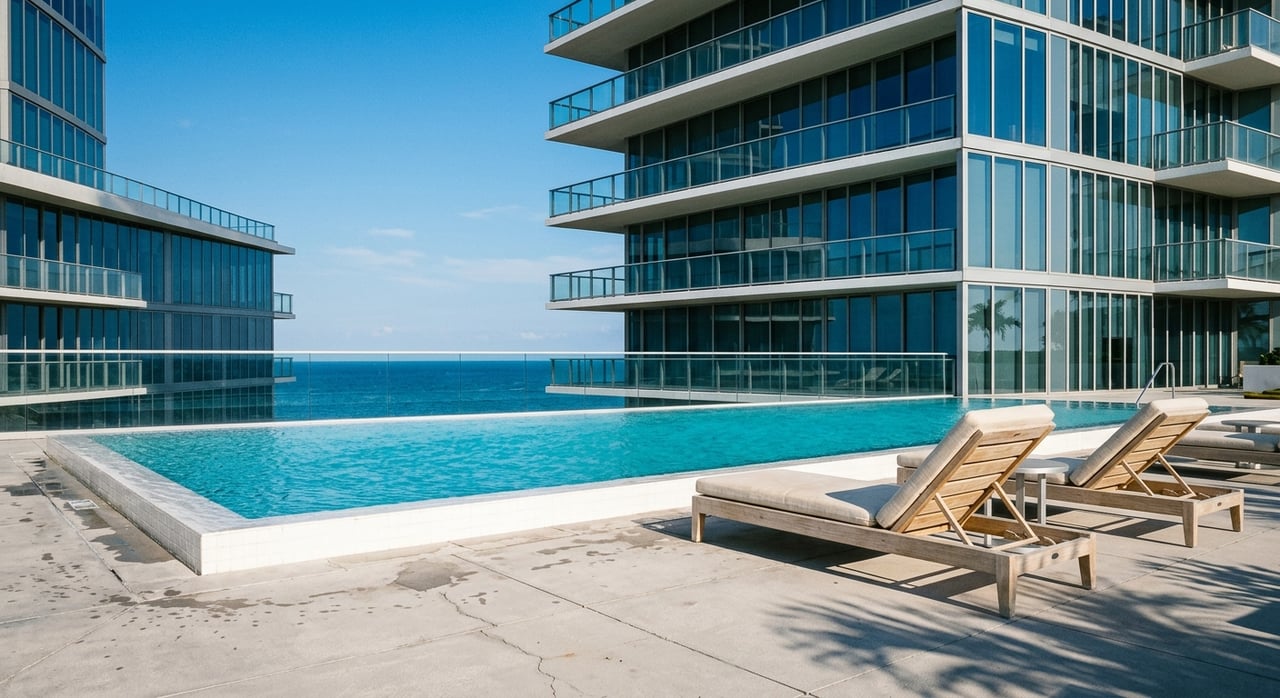
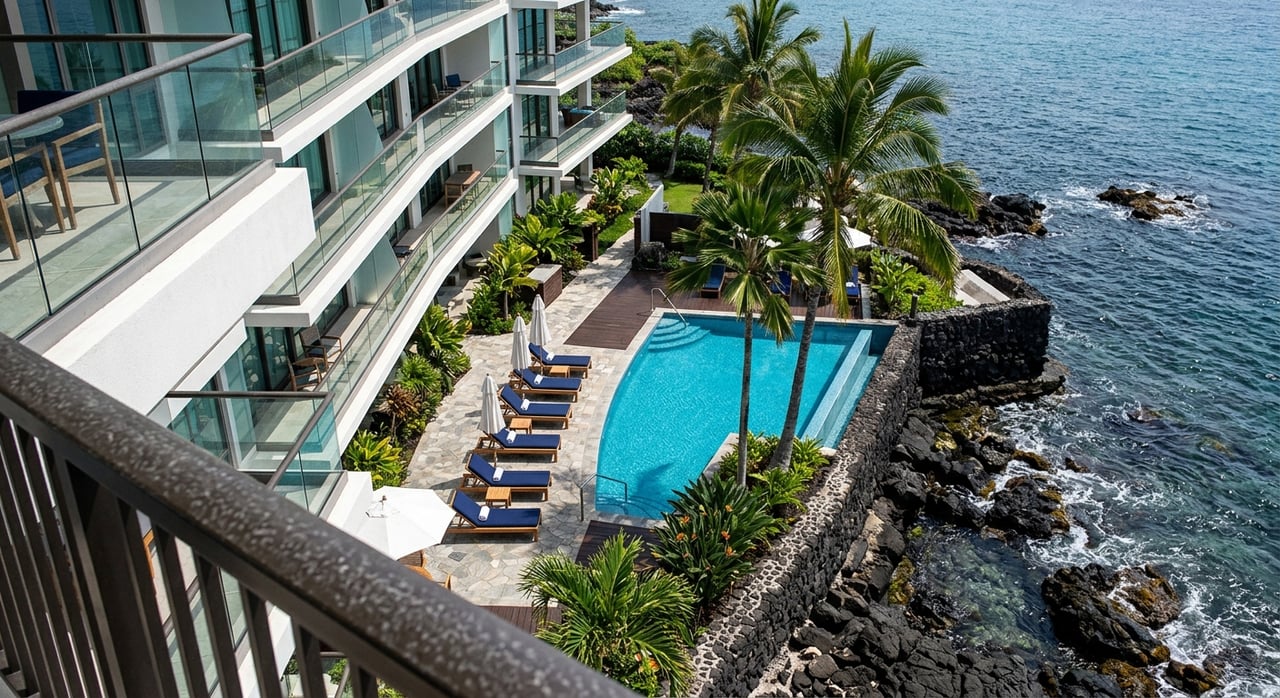
A rooftop lounge and resort-style pool may look similar from building to building, but the long-term cost burden can be very different. The better question is not just what is there, but what does it take to run and replace it?
As you compare towers, think about amenities in groups:
- High-maintenance features: pools, spas, landscaped decks, elevators, large fitness centers
- Service-based features: concierge, security, valet-style support, staffed front desks
- Shared-use spaces: club rooms, theaters, guest suites, meeting rooms
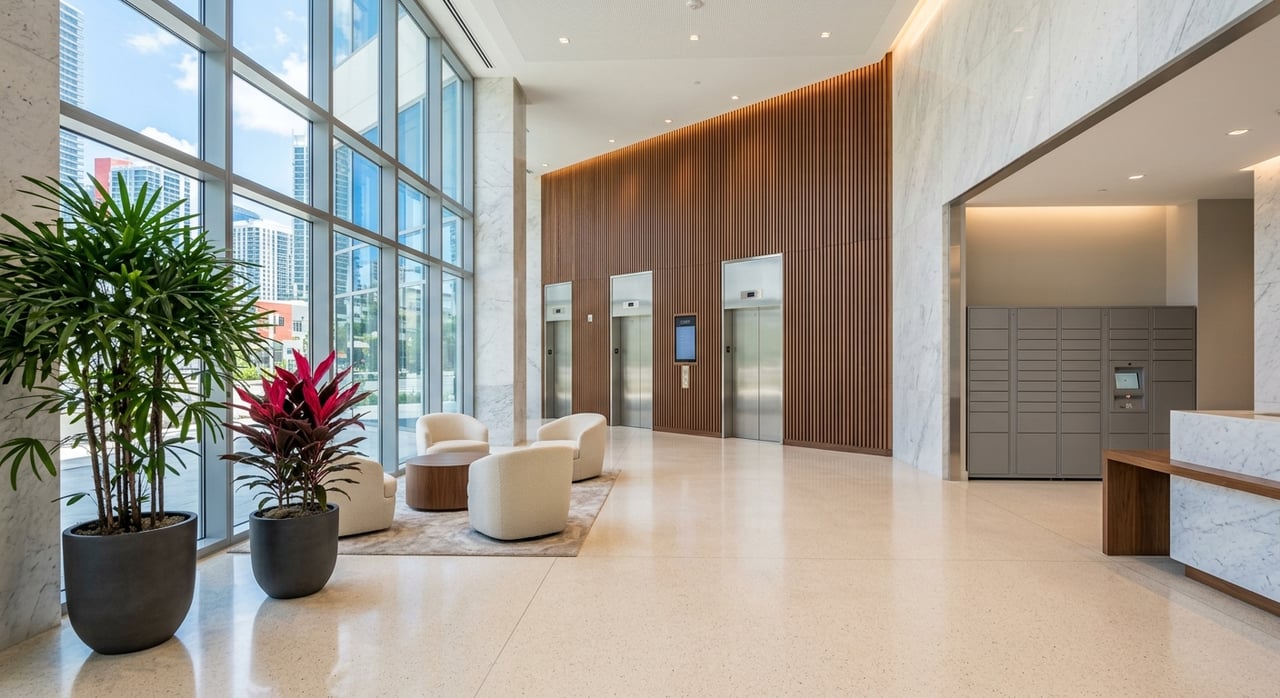
- Convenience items: bike storage, package handling, parking access, storage areas
In general, the more complex the amenity package, the more likely it is to affect both current dues and future reserve needs.
Ask who actually provides the services
There is no Hawaiʻi law requiring a condominium association to hire a third-party managing agent. So if a building advertises management, concierge, security, or maintenance support, you should ask who is actually providing those services.
This is especially important when you compare two buildings with similar fees. One may include more hands-on staffing in the monthly assessment, while another may rely on different service arrangements or have separate billing for certain functions.
If there is a managing agent, the management contract should describe services, compensation, and accounting responsibilities. For a buyer, that can help clarify whether the building’s operations are well-defined and how labor-related costs are being handled.
Separate neighborhood value from HOA value
This is one of the most important Kakaʻako-specific comparisons you can make. In master-planned areas, some benefits come from the broader district and should not be confused with what your building’s HOA is paying for.
For example, Ward Village publicly promotes parks, bike stations, a security center, and more than 2,600 parking stalls as part of the neighborhood experience. If a tower has fewer private amenities, that may not be a weakness if the surrounding district already supports the lifestyle you want.
A simple way to compare buildings is to make two columns:
| Category | Questions to Ask |
|---|---|
| Building-funded | What amenities are paid for by the association? What services are included in the monthly fee? |
| Neighborhood-level | What nearby parks, shops, bike access, parking, and services are part of the location rather than the tower budget? |
This approach keeps you from overpaying for private amenities you may not need if the district already fills those gaps.
Look beyond the base maintenance fee
A lower monthly fee can be attractive, but it does not always mean a better value. In Kakaʻako, a more useful comparison is your all-in monthly carrying cost.
That broader number may include:
- Base maintenance fees
- Reserve contributions
- Insurance-related cost exposure
- Limited common element costs for parking or storage
- Any ongoing or recent special assessment obligations
This is often where buyers get a more honest picture of affordability. A building with slightly higher dues but stronger reserves and fewer surprise costs may be more stable than one with lower dues that has underfunded long-term obligations.
Review the annual budget and reserves carefully
The annual budget is one of the clearest windows into how a building is being run. Under Hawaiʻi law, the budget must disclose operating revenues and expenses, whether it is prepared on a cash or accrual basis, reserve balances, reserve-study-based replacement reserves, how those reserves are computed, the amount needed for the fiscal year, and whether the association uses a percent-funded or cash-flow plan.
For Honolulu high-rise buyers, this helps answer a key question: are dues being set to match real long-term costs, or are they being kept artificially low?
DCCA also explains that there is no single reserve target that fits every condo. A reserve study should identify what the association must maintain, when those items will need repair or replacement, and how much that work is expected to cost.
Current law also requires reserve-study review by an independent reserve study preparer at least every three years if the study was not prepared by one. The association must assess owners to fund at least 50% of estimated replacement reserves, or 100% if it uses a cash-flow plan.
Watch for signs of future fee pressure
Fee stability matters, but so does fee realism. Hawaiʻi law requires at least 30 days written notice for maintenance-fee increases, and except in emergencies or with majority owner approval, the board generally may not exceed its adopted annual operating budget by more than 20% in the fiscal year.
Still, that does not mean your fees will stay flat. DCCA notes that a new board or managing agent may raise fees after years of little change if prior budgets were too low to cover the true cost of operating the project.
You should pay close attention if you see:
- Very low fees compared with similar towers
- Thin reserve balances
- Delayed repairs or aging common areas
- Recent management changes
- Large upcoming building projects
These may suggest future increases or special assessments.
Special assessments deserve serious attention
If reserves are too thin, an association may need to levy special assessments, borrow money, or defer repairs. DCCA specifically notes that insufficient reserves can lead to all three.
For a buyer, this means you should not stop at today’s monthly dues. Ask whether the building has had special assessments in recent years, whether any major work is pending, and whether reserve funding appears aligned with the building’s replacement needs.
A building with beautiful amenities but weak reserves can become much more expensive after closing.
Check parking and storage details
In Kakaʻako towers, parking and storage are not just convenience features. They can also affect your costs and ownership rights.
If a parking stall or storage locker is treated as a limited common element, Hawaiʻi law generally assigns its maintenance, repair, replacement, additions, and improvements to the unit or units it serves unless the declaration or bylaws state otherwise. That means these items may carry responsibilities or costs that are not obvious from the base maintenance fee alone.
When comparing buildings, ask:
- Is the parking stall deeded, leased, or a limited common element?
- Is storage included, optional, or separately assigned?
- Are there added charges tied to those spaces?
- Do the governing documents shift maintenance responsibility in any specific way?
These details matter more than many buyers expect.
Include insurance in your fee review
Insurance should be part of your condo-fee evaluation from the start. According to DCCA, the condo association master policy covers the building structure, common areas, and usually the original as-built unit construction.
DCCA also notes that many associations carry large deductibles, and those deductibles may be assessed against owners under the governing documents or board policy. Your own HO-6 policy may cover the unit, improvements, personal property, and possibly deductible assessments, additional living expenses, and liability depending on the policy.
Other coverage may include flood, hurricane, earthquake, and additional liability insurance, and flood insurance is required by statute if the property is in a FEMA special flood hazard area. In short, insurance is not separate from the fee conversation. It is part of the total risk and cost picture.
Pay attention to mixed-use cost allocation
Kakaʻako includes projects with residential, retail, and other uses in the same development. In mixed-use buildings, the declaration may apportion common expenses in a fair and equitable manner.
That is why buyers should ask whether retail or office components affect the residential share of costs. A project can be attractive and well-run, but you still want to understand how shared expenses are divided and whether any limited common element expenses are separately allocated.
This can be especially important when you are comparing one pure residential tower against another project with a more blended layout.
Request the right documents
Hawaiʻi gives owners and their authorized agents access to important condo records. Requested items can include the declaration, bylaws, house rules, public reports and amendments, managing agreements, the most current financial statement, board and association meeting minutes, insurance policies, contracts, invoices, and delinquency summaries.
DCCA says many requested records must be provided within 30 days, and the most current financial statement should be available at no cost or on 24-hour loan. For a buyer, these records can reveal far more than a marketing sheet ever will.
Best questions to ask before you buy
If you want a cleaner side-by-side comparison of Kakaʻako towers, focus on a short list of practical questions:
- What exactly is included in the monthly assessment?
- Which amenities are building-funded and which are really neighborhood-level benefits?
- Who provides management, concierge, security, and maintenance services?
- When was the reserve study last updated, and who prepared it?
- Are any fire-safety or life-safety projects pending?
- Have there been any recent special assessments?
- How are parking and storage assigned?
- How do insurance deductibles affect owners?
- In a mixed-use project, how are shared costs allocated?
These questions help you move from surface-level comparison to real financial understanding.
A smarter way to compare Kakaʻako condos
The best Kakaʻako condo is not always the one with the longest amenity list or the lowest maintenance fee. It is the one where the amenities match your lifestyle, the budget reflects real operating costs, reserves are being handled responsibly, and the total monthly carrying cost makes sense for your goals.
In a neighborhood where district-wide conveniences can be just as valuable as in-building perks, a thoughtful comparison matters. If you want help evaluating condo documents, comparing towers, or narrowing down the right fit in Kakaʻako, connect with Fortune Hawaii Realty for informed, concierge-level guidance.
FAQs
What should you compare when reviewing Kakaʻako condo amenities?
- Compare which amenities are funded by the building, which lifestyle benefits come from the surrounding district, how often you would actually use each feature, and how those amenities affect ongoing operating and reserve costs.
How are Kakaʻako condo maintenance fees calculated?
- In Hawaiʻi, condo assessments are generally based on an annual association budget, with common expenses typically charged according to common interests unless the declaration or bylaws provide a different method.
Why can a Kakaʻako condo with fewer amenities still be a strong option?
- Some Kakaʻako lifestyle value comes from the district itself, including parks, retail, dining, bike access, and parking infrastructure, so a tower may offer a strong location package even with a smaller private amenity set.
What reserve questions should you ask about a Honolulu condo building?
- Ask when the reserve study was last updated, who prepared it, how reserve needs are calculated, what the current reserve balance is, and whether the association appears to be funding long-term replacement costs responsibly.
Do parking and storage affect Kakaʻako condo costs?
- Yes. Parking stalls and storage lockers may be limited common elements, and their maintenance or replacement responsibilities can affect your overall cost depending on the governing documents.
Why should insurance be part of your Kakaʻako condo fee review?
- The association’s master policy, deductible structure, and any owner responsibility for deductible assessments can affect your total cost exposure, so insurance should be reviewed alongside monthly fees and reserves.