Walk through a sales gallery on Ala Moana Boulevard and you will hear the pitch dressed up different ways, but it usually lands on the same promise: buy here, rent nightly, let the tourists cover the mortgage. It is a reasonable thing to assume in a city built on visitor spending. It is also, for a Kakaʻako condo bought today, flatly untrue, and the reason has almost nothing to do with the court fight that dominates every Oʻahu short-term rental headline.
That fight is real. Honolulu spent 2022 through 2025 trying to push the citywide minimum rental term from 30 days to 90, got blocked by a federal judge, tried again, and is still working through it. But none of that back-and-forth changes what a new Kakaʻako owner can legally do with a unit, because Kakaʻako was excluded from nightly rentals before the lawsuit was ever filed. The zoning map decided this question in the 1980s. The litigation is a subplot.
The Zoning Gate, Not the Lawsuit, Is What Locks the Door
Honolulu allows rentals under 30 consecutive days in a short list of places: the resort-zoned pockets of Waikīkī, Ko Olina, and Turtle Bay, plus a small number of hotel-zoned parcels scattered downtown. Kakaʻako is not on that list. It never has been. The neighborhood's zoning is residential and mixed-use, not resort, which means the city's own Land Use Ordinance puts nightly rentals off limits there regardless of how the 30-versus-90-day fight eventually resolves.
There is one other path to legal nightly rentals: a Non-Conforming Use Certificate, issued to properties that were already operating as short-term rentals before the city's zoning reform closed that door in October 1986. Fewer than 800 of these certificates exist citywide, and the city stopped issuing new ones in 1990. They cluster in Waikiki's older hotel-adjacent buildings. Almost none sit in Kakaʻako, because almost none of Kakaʻako existed yet. Waiea, the first Ward Village tower, did not open until 2017. A certificate that required proof of legal use in 1986 cannot attach to a building that was still a warehouse lot at the time.
So a Kakaʻako condo has no resort zoning and no grandfather clause. That is the actual gate, and it closed long before Ordinance 22-7 (Bill 41) became a headline.
Why the Lawsuit Everyone's Watching Doesn't Rescue You
Here is where the confusion usually sets in, because the litigation gets so much coverage that buyers assume it is the thing that matters. In December 2023, a federal judge issued a permanent injunction blocking the city from enforcing its 90-day minimum against rentals that were already lawfully operating for terms between 30 and 89 days before the ordinance took effect. The Honolulu Star-Advertiser reported the order's language directly, protecting rentals "lawfully in existence at its effective date, or the advertisement of such rentals."
Read that again. It protects rentals that already existed. It does not create a new right to start one. If you close on a Kakaʻako unit next month with no rental history attached to it, that injunction has nothing to protect, because there was no lawful 30-to-89-day rental to grandfather in the first place. The court fight matters enormously for someone who already had a mid-term rental running before October 2022. It is a non-event for a new Kakaʻako buyer, because the two situations never touch.
This is the piece most general guides to Oʻahu short-term rentals skip, because they are written for the island as a whole and the distinction only bites in neighborhoods like Kakaʻako where every building is new.
What Actually Works, and Who's Already Doing It
None of this means a Kakaʻako condo is a poor rental property. It means the income strategy has to be a 30-day-or-longer lease, and that market is real. Traveling nurses on assignment at Queen's Medical Center, relocating families waiting on a house closing, and film or production crews on short contracts all book furnished units in this range. Monthly rates tracked through furnished-rental platforms and specialized brokers ran roughly $4,200 to $6,800 for a two-bedroom as of August 2026, with steady demand specifically noted in Kakaʻako alongside Kaimukī and Hawaiʻi Kai.
That income is legal, straightforward to operate, and does not require registration as a Transient Vacation Unit, since it clears the 30-day floor the city currently enforces. It also still owes Hawaiʻi's General Excise Tax on every dollar collected, and the state's Transient Accommodations Tax applies to any stay of 180 days or fewer, a rate that rose to 11% on January 1, 2026, on top of a 3% county surcharge. Only leases of 181 days or longer escape the TAT. A furnished 45-day rental and a standard 12-month lease are taxed very differently, and that difference belongs in the pro forma before it belongs on the closing statement.
The Building Can Say No Even When the City Already Has
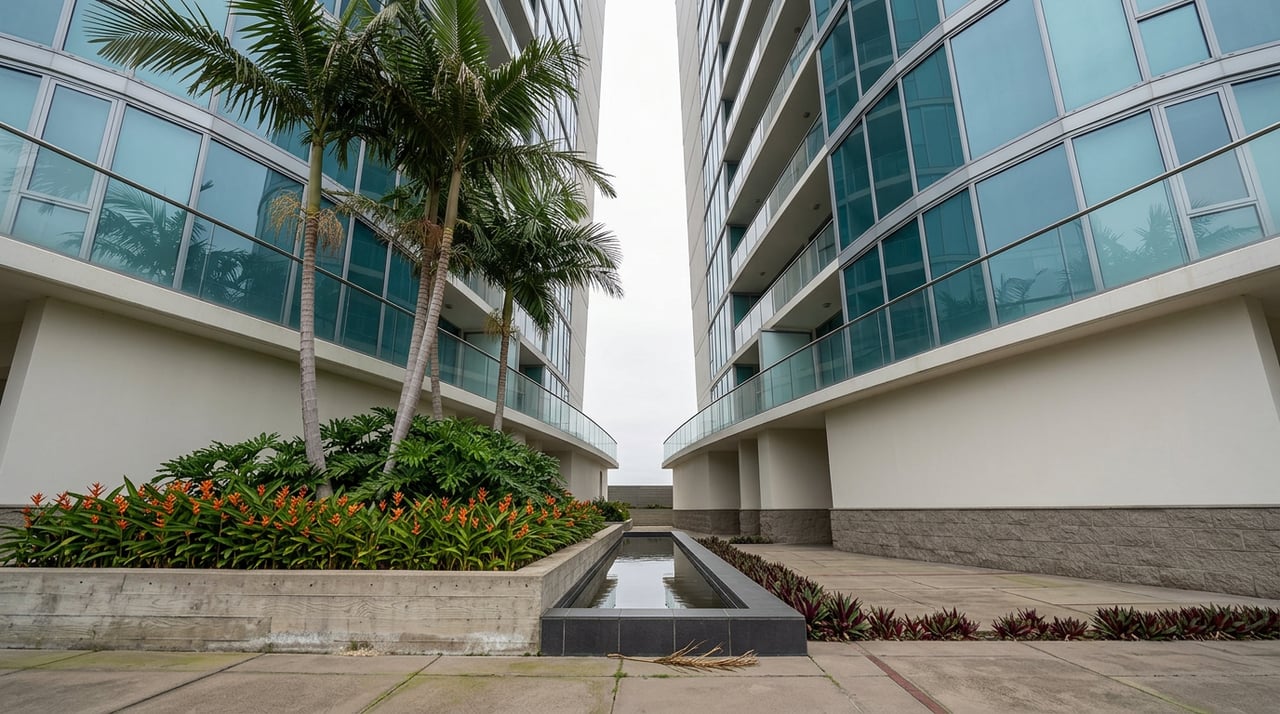
Even inside the 30-day-plus lane, the condo's own governing documents get the final word, and Kakaʻako's newest towers are not shy about using it. The Park Ward Village, which opened in June 2026 as the ninth completed tower in the master plan, bars short-term vacation rentals through its association rules entirely, independent of what city zoning would technically allow at 30 days or more. That is not unusual. Associations in amenity-heavy buildings routinely restrict rentals to protect the resident experience they are selling, and a board vote can tighten what an owner assumed was settled by the ordinance.
Before writing an offer on any Kakaʻako unit with rental income in mind, ask for three documents: the declaration and bylaws' rental restriction language, the house rules governing minimum lease terms, and any recent board minutes discussing rental policy changes. A building can legally permit 30-day rentals under city law and still prohibit them under its own house rules, and the second rule is the one that actually governs your unit.
The Real Math Sits in the Maintenance Fee, Not the View
Once the legal and building-level rules are settled, the number that decides whether a rental strategy actually pencils is the monthly maintenance fee, and Kakaʻako's range is wide enough to change the outcome. Across Honolulu condos generally, maintenance fees run from roughly $1.00 to $2.76 per square foot as of September 2026, against an average price of about $721 per square foot for the units themselves. That is not noise. A fee at the low end typically reflects a smaller staff, fewer amenities, and a leaner reserve contribution. A fee at the high end usually means round-the-clock concierge staffing, resort-scale pools and fitness decks, and a healthier reserve fund being built to cover the elevator and roof work every high-rise eventually needs.
Neither end is automatically the better investment. A lower fee helps monthly cash flow on a furnished mid-term rental, but an underfunded reserve is how a building ends up hitting owners with a special assessment mid-ownership, which erases years of that cash-flow advantage in one lump sum. The fee is the entry point into that question, not the answer to it, and it is worth reading the actual reserve study rather than assuming the monthly number tells the whole story.
Kakaʻako's own recent sales data underscores how much this market has cooled from its peak pace: over the three months ending March 2026, closed transactions averaged 71 days on market, down from 111 days over the same window a year earlier, while the median price per square foot fell 22.6 percent year over year. A slower, better-priced market rewards buyers who do the maintenance-fee and reserve homework before they close, not after.
What This Means If You're Actually Buying
If a Kakaʻako condo is on your list because you want rental income, the plan that works is a furnished or standard lease of 30 days or longer, priced with GET and TAT built in, in a building whose house rules you have actually read. The plan that does not work, no matter what a floor plan brochure implies, is nightly rentals, because that door closed on this neighborhood before the towers existed to walk through it.
Fortune Hawaii Realty works with buyers on both sides of that math, bilingual outreach for transpacific investors included, matching Kakaʻako inventory to the rental strategy that is actually legal for a given building and running the numbers on maintenance fees and reserves before an offer goes in rather than after. If you are weighing a Kakaʻako purchase for income, income for personal use, or both, Fortune Hawaii Realty can walk through what a specific building's rules and financials actually allow. Book an appointment and bring your questions about the building you're watching.
FAQ
Can I buy an existing Kakaʻako Airbnb and keep running it as one? Kakaʻako has no resort zoning and essentially no Non-Conforming Use Certificates, since its towers postdate the 1986 grandfather cutoff. If a listing markets itself as an active nightly rental in Kakaʻako, confirm exactly what certificate or exemption it is operating under before assuming that status transfers to you as the new owner.
Does buying in Ward Village versus Our Kakaʻako change any of this? No. Both master plans sit on the same non-resort zoning, so the city-level rules covering short-term rentals apply identically across every tower in the neighborhood. What differs building to building is the association's own house rules, which is why reading each building's rental restrictions matters more than which master plan it belongs to.
Is a 30-to-89-day furnished rental a permanent workaround? It is legal today under the enforcement standard currently in place, but it depends on how the city's ongoing 90-day minimum litigation eventually resolves for new operators. Anyone building an investment plan around it should treat it as the current rule, not a guaranteed one, and keep an eye on how enforcement develops.