Thinking about a Waikīkī condo and stuck between using it as your personal retreat or running it as a short‑term rental? You are not alone. Many buyers want the lifestyle benefits of a vacation home while also exploring income potential from Honolulu’s tourism market. In this guide, you will learn how to evaluate legal rules, revenue drivers, carrying costs, management choices, and due diligence steps so you can pick the path that fits your goals. Let’s dive in.
Start with legality and building rules
Before you plan for income, confirm whether short‑term rentals are even allowed for your specific unit. In Waikīkī, permission depends on several layers, and they all need to align.
- Condominium documents control first. Declarations, Bylaws, and House Rules often set minimum stays, require approvals, or prohibit STRs entirely. Resort‑style buildings may allow transient stays, but you must verify in writing.
- Zoning does not override condo rules. Many buildings sit in resort or hotel districts, yet association documents can still restrict short stays.
- State and county compliance matters. Short‑term rental revenue is generally subject to state Transient Accommodations Tax and General Excise Tax, with registration and filings required. Honolulu has registration and enforcement programs that have evolved in recent years.
- Insurance requirements differ. Many standard condo policies exclude STR activity. You may need specialty coverage or endorsements for guest stays.
Regulatory and association rules can change. Review recent board minutes and building communications, and confirm current Honolulu requirements before you commit.
Revenue drivers in Waikīkī
Waikīkī is one of Hawaiʻi’s highest‑volume tourism districts. STRs compete with a deep hotel inventory and professionally managed condos, so you need to position your unit well.
Key demand and pricing drivers include:
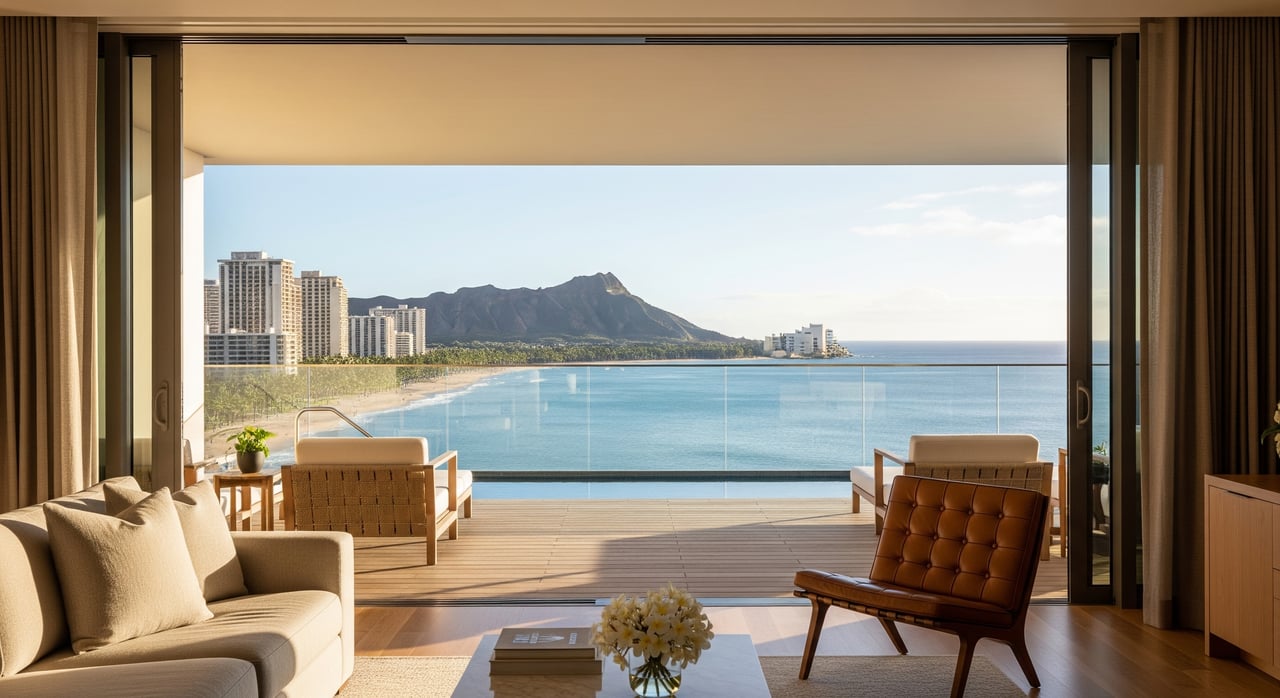
- Unit features: ocean or partial‑ocean views, higher floors, modern renovations, and larger layouts can lift rates and occupancy.
- Building amenities: pools, security, concierge services, on‑site dining, valet or parking often enable premium pricing.
- Location and access: proximity to the beach, walkability, and resort conveniences support year‑round appeal.
- Listing and operations: professional photos, fast guest responses, dynamic pricing, and consistent cleaning increase booking cadence and reviews.
- Minimum stay rules: shorter minimums can increase bookings but raise turnover costs. Some buildings may require longer minimums.
Ask for recent ADR, occupancy, and RevPAR data for your building and unit type from reputable STR analytics sources or local market reports before modeling revenue.
Costs: vacation home vs STR
Every condo has baseline carrying costs. STR operation adds complexity and expense. Compare both sides before deciding.
Shared fixed costs
- Mortgage payments and financing costs
- Property taxes
- HOA dues, reserves, and special assessments
- Utilities and routine maintenance
STR‑specific incremental costs
- State taxes and filings: Transient Accommodations Tax and General Excise Tax apply to rental income
- Platform and processing fees
- Management fees: full‑service programs often charge a percentage of gross revenue
- Cleaning, laundry, supplies, and restocking per stay
- Higher wear and tear, plus periodic furniture and equipment refreshes
- Increased utilities and guest support costs
Vacation home only costs
- Lower operational complexity and fewer vendor relationships
- Cleaning and utilities during your stays
- Opportunity cost of unbooked time that could have generated rental income
Financing and insurance considerations
- Loans: lenders typically view investment properties differently than second homes. Expect different down payment and rate structures.
- Insurance: standard policies often exclude short‑term guest stays. STR use usually requires a short‑term rental endorsement or specialized coverage.
Taxes and accounting
- Rental income is taxable. Common deductible items include allocable HOA dues, utilities, repairs, management, cleaning, depreciation for rental periods, and platform fees.
- Personal use days affect expense allocation and depreciation eligibility.
- You must maintain records and remit required state taxes on transient accommodations and gross receipts.
Management options and what they mean for you
How you manage the unit affects both revenue and your time commitment. Choose the model that matches your availability and risk tolerance.
Self‑management
- Lowest ongoing fees but highest time demand
- You handle pricing, guest support, cleaning coordination, maintenance, and compliance
- Best for local owners who want full control
Co‑hosting or hybrid
- Split responsibilities with a co‑host who manages listing tasks, guest communication, or cleanings
- Lower fees than full‑service management
- You remain involved in oversight and decisions
Full‑service STR management
- End‑to‑end support: listings, dynamic pricing, 24/7 guest care, cleaning, maintenance coordination, and compliance assistance
- Fees are commonly a percentage of gross revenue, plus cleaning and onboarding costs
- Helpful if you want a hands‑off approach with professional systems
Long‑term lease to a manager
- Manager guarantees rent and operates the STR at their risk
- Lower volatility for you but often lower total returns
Operational realities in Waikīkī include frequent turnovers, the need for reliable cleaning teams, clear house rules, and proactive communication with the association. Plan for on‑island support and rapid response to guest needs.
Build a simple STR pro forma
Use a conservative approach and pressure test your assumptions.
Inputs to gather:
- Average daily rate and occupancy for your building and unit type
- Estimated platform, management, and cleaning fees
- State taxes on transient accommodations and gross receipts
- HOA dues, insurance, utilities, and maintenance
- Mortgage costs and any parking or storage fees
Steps:
- Estimate annual gross revenue: ADR x occupied nights.
- Subtract platform, management, and cleaning expenses.
- Subtract state taxes on rental revenue as required.
- Subtract HOA dues, insurance, utilities, maintenance, and reserves.
- Compare net cash flow to your mortgage and other fixed costs.
Stress‑test results by reducing occupancy or rates, and by modeling stricter minimum stays. Identify the number of booked nights needed to cover carrying costs.
Due diligence checklist before you buy
- Read the condominium Declaration, Bylaws, House Rules, and rental policies. Confirm minimum stay rules, any rental caps, approvals, insurance requirements, and pending amendments.
- Review recent board minutes and building communications for enforcement actions or proposed rule changes.
- Ask about the building’s rental mix and history of STR complaints or fines, if any.
- Confirm state and county registration and filing requirements for short‑term rentals.
- Evaluate HOA financials, reserves, and potential special assessments.
- Get insurance quotes for both personal use and STR coverage.
- Speak with lenders about second‑home versus investment classification, down payment, rates, and whether rental income can help you qualify.
- Pull local STR comp data for your unit type from reputable analytics providers and hotel benchmarks.
- Interview at least one Waikīkī STR manager and one local agent for realistic P&L scenarios.
- Consult a tax professional about rental income, deductions, depreciation, and the impact of personal use days.
Which path fits your goals?
Choose a vacation home if you value personal use, simplicity, and control over your calendar. You will likely have fewer vendors to manage and less operational complexity, but you will forgo rental income during your stays.
Choose an STR investment if you want to maximize income potential and you are ready for compliance, guest operations, and variable cash flow. Strong management, data‑driven pricing, and building alignment are essential.
If you want both lifestyle and offsetting income, consider a mixed approach in a building that clearly allows transient stays. Align your personal use calendar with high and low seasons and update your pricing strategy regularly.
Your next step
Whether you lean vacation home, STR, or a hybrid plan, you deserve clear guidance and a smooth path to ownership. If you want building‑specific rules, realistic STR comps, and management options tailored to you, connect with the team at Fortune Hawaii Realty. We combine Waikīkī condo expertise, bilingual client care, and full‑lifecycle support so you can move forward with confidence.
FAQs
Can I legally operate a short‑term rental in a Waikīkī condo?
- It depends on your building’s governing documents and current Honolulu rules. Many resort buildings permit transient stays, while some condos prohibit them. Verify in writing before you buy.
What taxes apply to Waikīkī short‑term rental income?
- Rental revenue is generally subject to state Transient Accommodations Tax and General Excise Tax. Registration, filings, and remittances are required.
How much can a Waikīkī condo STR earn?
- Income varies by view, unit size, building amenities, seasonality, and management quality. Use current ADR and occupancy data for your unit type to build a conservative pro forma.
What are the main costs of running a Waikīkī STR?
- Expect management and cleaning fees, platform charges, state taxes on rental revenue, higher insurance, HOA dues, utilities, and periodic furniture and equipment refreshes.
How do financing and insurance differ for STRs vs vacation homes?
- Investment loans often require larger down payments and carry higher rates than second‑home loans. Standard insurance may exclude STR use, so specialized coverage is typically needed.